


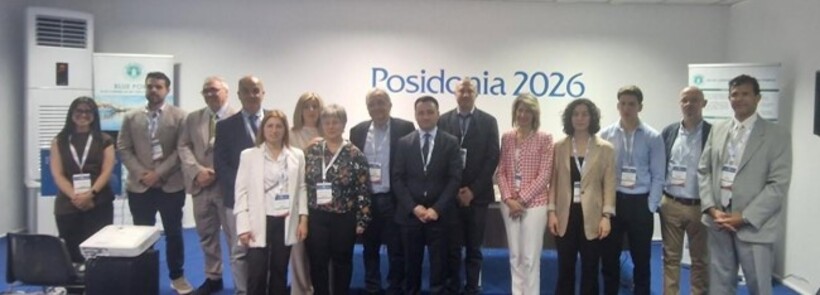
On 3 June 2026, the BLUE PORTS consortium successfully held the international conference “NET ZERO PORTS: Empowering the Human Capital Behind the Green Transition” within the framework of Posidonia 2026 in Athens, the world’s leading international maritime exhibition. The event was organised by the BLUE PORTS Consortium, under the coordination of the Renewable and Sustainable Energy Lab of the Technical University of Crete (ReSEL TUC), in collaboration with the Hellenic Ports Association (ELIME) and the Heraklion Port Authority, with the support of the Ministry of Maritime Affairs & Insular Policy.
Within the frame of the most important global maritime gatherings, attracting more than 40,000 participants from over 130 countries, the BLUE PORTS conference provided a unique opportunity to place workforce development and sustainability skills at the centre of discussions on the future of ports and shipping. The conference brought together representatives from ports, maritime organisations, certification bodies, policymakers, training providers, industry associations and sustainability professionals from across Europe and beyond to discuss one of the most pressing challenges facing the maritime sector: developing the skills and competencies needed to support the green transition of ports.
Human capital at the centre of the green transition
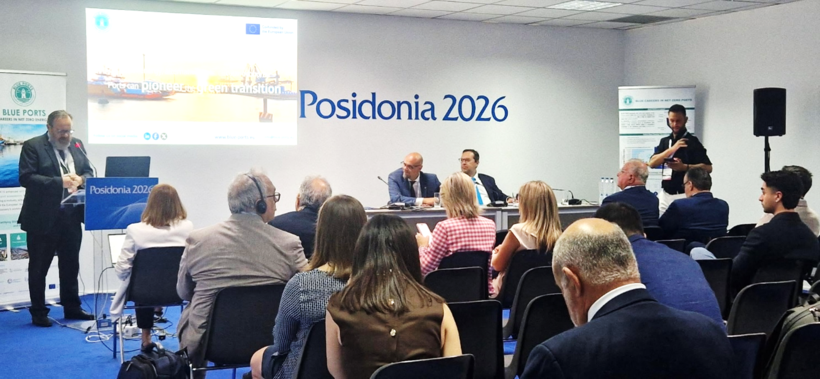
The event opened with welcome addresses from representatives of the Ministry of Maritime Affairs and Insular Policy, the Hellenic Ports Association (ELIME), the Technical University of Crete and the Heraklion Port Authority. A keynote intervention by Andreea Strachinescu, Head of Unit for Maritime Innovation, Marine Knowledge and Investment at the European Commission (DG MARE), presented the European Ocean Pact and emphasised the growing importance of blue skills and workforce development in achieving Europe’s sustainability and decarbonisation objectives.
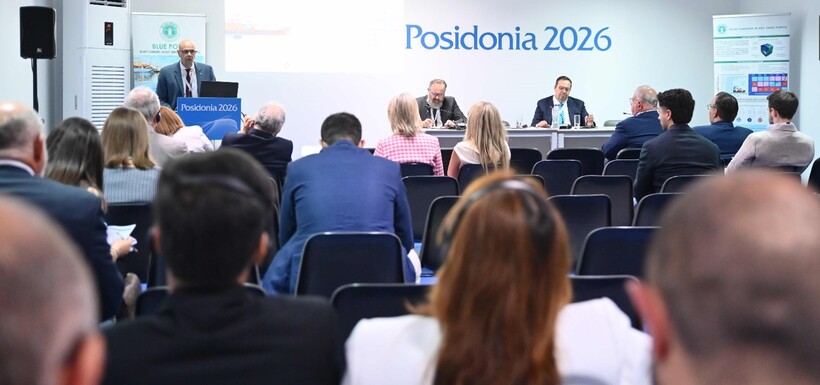
The first round table, moderated by Prof. Theocharis Tsoutsos, Director of theRenewable and Sustainable Energy Lab of the Technical University of Crete, focused on the development of a qualified workforce for greener ports and presented the achievements and lessons learned from the implementation of the BLUE PORTS project. Representatives from the Heraklion Port Authority, TÜV NORD HELLAS, Fundación Valenciaport, the Maritime Transport Agency of Georgia and the Technical University of Crete highlighted the importance of creating a sustainability culture across port organisations, fostering cooperation among stakeholders and ensuring that training and certification programmes remain aligned with evolving market needs and technological developments. Panellists also stressed that the development of human capital, both operational and managerial personnel, is a prerequisite for ensuring that investments in green infrastructure and innovative technologies deliver their intended environmental benefits.
Strong support from the maritime and port community
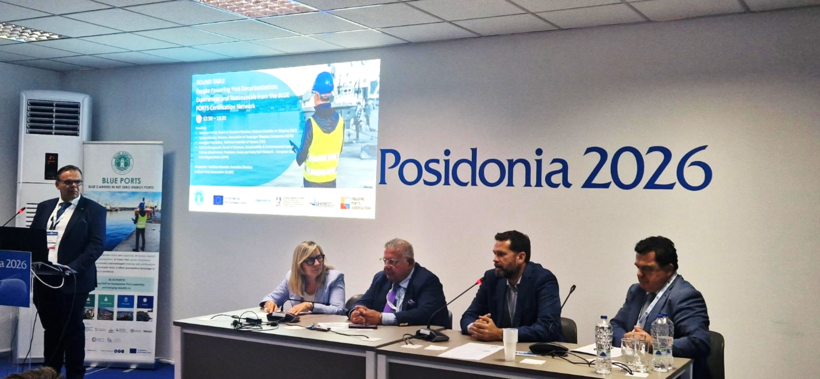
The second round table, moderated by Vasileios Mamalis, Executive Director of the Hellenic Ports Association (ELIME), brought together key stakeholders involved in the development and implementation of the BLUE PORTS Certification Scheme through the project’s National Technical Committees, including representatives from the Hellenic Chamber of Shipping (NEE), the Association of Passenger Shipping Companies (SEEN), the Technical Chamber of Greece (TEE), as well as European-level maritime and port networks such as MedCruise and the European Sea Ports Organisation (ESPO). The discussion was further enriched by video statements from the Port Authority of Valencia (APV), the Italian Shipowners’ Association (Assarmatori) and Poti New Sea Port of Georgia.
Discussions addressed emerging operational challenges related to shore-side electricity (cold ironing), alternative fuels, digitalisation, climate adaptation and environmental compliance. Speakers agreed that certification schemes such as BLUE PORTS can play an important role in equipping current and future professionals with the competencies needed to address these challenges effectively. The debate also highlighted the importance of collaboration between ports, shipping companies, regulators, professional associations and educational institutions to ensure that workforce development keeps pace with the rapid transformation of the maritime sector. A series of video statements from international port and maritime stakeholders further reinforced the importance of continuous learning, cooperation and knowledge exchange in building a sustainable port ecosystem.
Voices from the first blue ports candidates
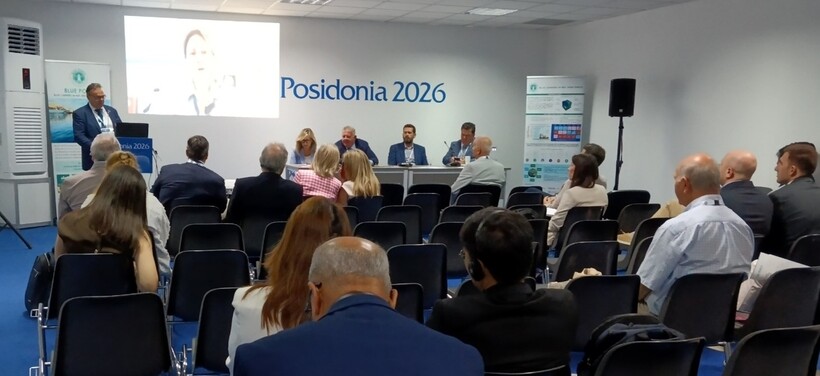
One of the most inspiring moments of the conference was the presentation of testimonials from participants currently enrolled in the BLUE PORTS training and certification programmes in Greece, Italy, Spain and Georgia.
Candidates highlighted how the programme is helping them acquire practical knowledge, better understand sustainability challenges and develop the competencies needed to support environmental improvements within their organisations. They also emphasised the value of networking opportunities and the importance of certification as a pathway for professional development and career advancement within the evolving blue economy.
The testimonials demonstrated that the development of sustainability competencies is already generating tangible benefits for ports and ports workforce and helping create a common understanding of sustainability challenges and opportunities across the sector.
Future skills for greener ports
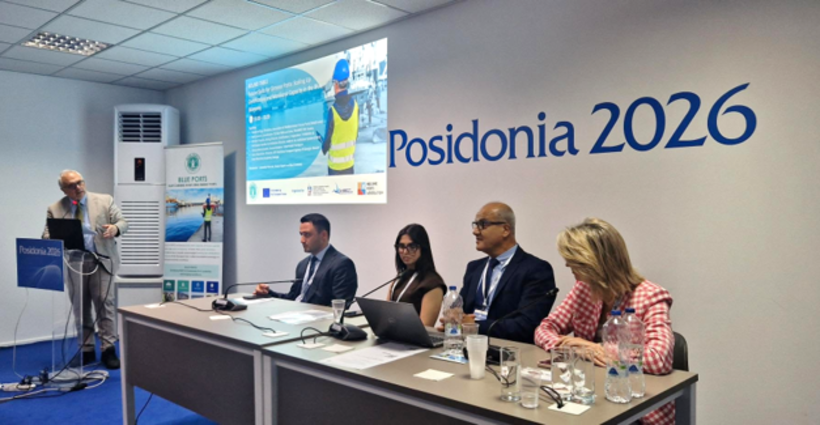
The final round table, moderated by Leonardo Manzari, Senior Expert on Blue Economy, explored future pathways for expanding workforce capacity and scaling up certification initiatives across the maritime sector. Experts from MedCruise, WestMED, Escola Europea, the Maritime Transport Agency of Georgia and Batumi State Maritime Academy reiterated that while technologies and infrastructure are essential, success ultimately depends on the ability of organisations to adapt, learn and embrace new ways of working. Training, reskilling and lifelong learning were identified as critical enablers of this transformation. Speakers also highlighted the importance of ensuring that sustainability knowledge reaches all levels of port organisations. BLUE PORTS was highlighted as a pioneering certification scheme specifically designed and accredited for port sustainability personnel.
BLUE PORTS at the Posidonia exhibition: Networking and stakeholder engagement
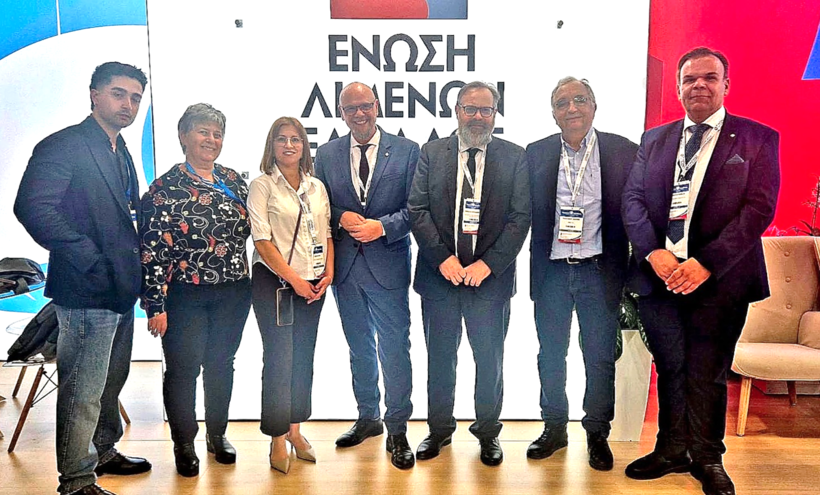
In addition to organising the conference, the BLUE PORTS consortium maintained a strong presence throughout the exhibition through the Hellenic Ports Association (ELIME) stand, where project partners engaged with port authorities, maritime organisations, training providers, certification bodies and industry stakeholders. Visitors had the opportunity to learn more about the BLUE PORTS training and certification scheme, its implementation across Europe, and its benefits for all stakeholders across the port ecosystem value chain.
Key Conclusions
The conference concluded with a strong consensus that the green transition of ports is ultimately a people-driven transformation. Participants highlighted the growing importance of green and digital skills, as well as the role of training, certification and lifelong learning in supporting sustainable port operations. Cooperation between ports, industry, educational institutions and certification bodies was recognised as essential for addressing future workforce needs, with the BLUE PORTS Certification Scheme presented as a scalable model for the wider blue economy.
Beyond the conference sessions, Posidonia 2026 provided valuable opportunities for networking and stakeholder engagement. Through its presence at the ELIME exhibition stand, BLUE PORTS reached a broad international audience and strengthened connections with key maritime and port stakeholders interested in advancing sustainability skills and certification.
As the project moves towards the completion of its pilot implementation phase, the BLUE PORTS consortium remains committed to equipping ports with the people needed to achieve a net-zero future.